


How Solid Core Doors Enhance Acoustic Insulation in Fire Safety
Solid core fire doors improve both fire protection and acoustic performance by using dense internal materials that reduce sound transmission while maintaining certified fire resistance. In commercial buildings where privacy, occupant comfort, and safety are equally important, acoustic fire doors have become a practical solution for combining passive fire protection with effective noise control.
For architects, contractors, and developers, choosing the right soundproof fire door is no longer only about meeting fire regulations. Modern projects increasingly require doors that can also improve acoustic comfort in offices, hotels, schools, healthcare facilities, and other high-traffic environments. This is why solid core door sound insulation performance has become an important consideration in commercial building design.
Why Acoustic Performance Matters in Commercial Buildings
Noise control plays a major role in occupant experience and building functionality. In commercial environments, excessive sound transmission can reduce productivity, affect privacy, and negatively impact comfort levels.
Hotels require quieter guest rooms for better customer experience. Offices need acoustic insulation doors to reduce distractions and improve meeting privacy. Healthcare facilities depend on quieter environments for patient recovery, while schools benefit from better sound separation between classrooms and public areas.
As commercial projects become more focused on occupant well-being, acoustic performance is increasingly integrated into building standards and design requirements. Many developers now prioritize fire-rated acoustic doors because they help meet both safety and environmental comfort expectations within a single door system.
Studies in workplace acoustics have shown that reducing noise distractions can improve concentration and communication efficiency. In hospitality and healthcare projects, improved sound insulation can also contribute to higher customer satisfaction and occupant comfort.
What Is a Solid Core Fire Door?
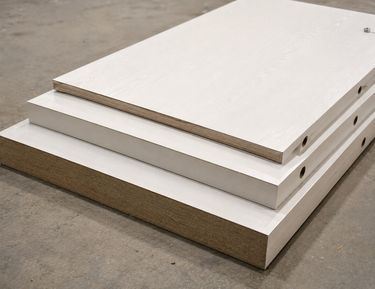
A solid core fire door is a fire-rated door assembly constructed with dense internal core materials instead of hollow structures. These materials are specifically designed to improve structural stability, thermal resistance, and sound insulation performance.
Unlike lightweight hollow constructions, dense-core fire door systems slow heat transfer during fire exposure while also limiting airborne sound transmission. This combination makes them highly suitable for commercial applications where both safety and acoustic performance are required.
Common core materials include mineral core, engineered timber core, composite fire-resistant materials, and high-density particleboard. Each material affects fire endurance, STC performance, weight, and installation requirements differently.
Key characteristics of solid core fire-rated acoustic doors include:
- Dense internal core construction
- Better sound isolation capability
- Improved structural durability
Certified fire protection performance Compatibility with smoke seals and acoustic hardware Because the core structure directly affects both fire containment and sound insulation, material selection becomes a critical factor during project specification.
How Solid Core Construction Reduces Sound Transmission
The main reason solid core doors provide better acoustic insulation is density. Dense materials absorb and block sound waves more effectively than hollow structures with internal air gaps.
When sound travels through a hollow door, vibrations can pass more easily through lightweight panels and empty internal spaces. In contrast, solid core construction increases mass and reduces vibration transfer, helping limit noise movement between rooms.
Acoustic fire door assemblies also use perimeter seals, drop-down seals, and specialized hardware systems to minimize sound leakage around the edges of the door. Even small gaps can significantly reduce acoustic performance if not properly controlled.
Several factors contribute to better soundproofing performance:
- Higher core density
- Tighter sealing systems
- Increased door thickness
- Better frame compatibility
- Proper installation quality
This is why commercial soundproof doors are often specified as complete tested systems rather than standalone products.
STC Ratings Explained for Fire Doors
STC, or Sound Transmission Class, measures how effectively a door assembly reduces airborne sound transmission. Higher STC ratings indicate stronger acoustic insulation performance.
For example, a standard interior door may provide limited noise reduction, while STC rated fire doors are designed to block significantly more sound. Commercial buildings often require higher STC levels in meeting rooms, hotel guestrooms, healthcare facilities, and educational environments.
The table below provides a simplified comparison of common STC performance levels:
| STC Rating | Typical Acoustic Performance | Common Applications |
|---|---|---|
| STC 25–30 | Basic speech reduction | Residential interiors |
| STC 30–35 | Moderate sound control | Offices & classrooms |
| STC 35–40 | Strong privacy performance | Hotels & conference rooms |
| STC 40+ | High acoustic isolation | Healthcare & executive spaces |
Higher STC performance usually requires denser core materials, improved sealing systems, and more precise installation methods.
It is important to understand that STC ratings apply to the complete assembly, including door leaf, frame, seals, glazing, and hardware. A high-performance door slab alone cannot guarantee acoustic results without compatible supporting components.
Solid Core vs Hollow Core Doors for Sound Insulation
When comparing solid core and hollow core doors, the biggest difference in acoustic performance comes from structural density. Hollow core doors typically provide limited sound reduction because of their lightweight internal structure.
Solid core doors, on the other hand, use dense materials that help absorb and block sound transmission more effectively. This makes them a preferred option for projects where noise control is important.
The difference becomes especially noticeable in commercial spaces with high occupancy levels or sensitive acoustic requirements. In hotels, healthcare facilities, and office meeting rooms, hollow constructions may allow conversations and background noise to pass through more easily.
Key Acoustic Differences
- Solid core doors reduce vibration transfer more effectively
- Hollow core doors generally provide lower STC performance
- Dense-core systems support better sealing performance
- Commercial environments typically require stronger sound isolation
While hollow core products may still be suitable for light residential applications, they are generally less effective for professional acoustic control requirements.
Applications: Hotels, Offices, Schools, Healthcare
Different industries require different levels of acoustic and fire protection performance. Solid core acoustic insulation doors are widely used because they provide a practical balance between safety, durability, and sound control.
Hotels often require soundproof fire door systems to improve guest comfort and reduce corridor noise. In offices, sound-insulated fire door help create quieter meeting rooms and more productive workspaces.
Educational facilities use STC rated fire doors to improve classroom concentration and reduce distractions between learning areas. Healthcare environments benefit from quieter patient rooms and improved privacy levels.
In many commercial buildings, combining acoustic insulation and certified fire protection into one assembly can simplify specification and reduce the need for separate performance solutions.
How Fire Door Core Materials Affect Acoustic Performance
Core material selection strongly influences both fire resistance and sound insulation capability. Denser materials generally provide better acoustic control because they absorb more vibration energy.
Mineral core systems are commonly used in high-performance fire-rated acoustic doors because they combine strong thermal stability with good sound reduction properties. Composite cores can also provide balanced acoustic and structural performance while supporting decorative finishes.
Several core-related factors influence acoustic performance:
- Material density
- Core thickness
- Internal structural consistency
- Moisture stability
- Compatibility with seals and hardware
Choosing the correct core material depends on the required STC level, fire rating, project budget, and installation conditions.
Choosing the Right Acoustic Fire Door for Your Project
Selecting the right acoustic fire door requires balancing multiple performance requirements. Contractors and architects should evaluate not only certified fire protection but also acoustic goals, durability expectations, and long-term maintenance considerations.
Commercial projects with high occupancy or sensitive acoustic environments often require tested assemblies with higher STC ratings and certified smoke control systems. Proper installation is equally important because poor sealing or frame alignment can reduce both acoustic and fire performance.
Project teams should also confirm compatibility between the door, hardware, glazing, seals, and frame system. Using uncertified component combinations may affect inspection approval and long-term operational reliability.
In many cases, investing in higher-quality commercial soundproof doors can reduce occupant complaints, improve building comfort, and support better long-term project value.
Conclusion
Dense-core fire door systems provide an effective combination of fire protection, structural durability, and acoustic insulation performance. As commercial buildings place greater emphasis on occupant comfort and environmental quality, acoustic fire doors have become an increasingly important part of modern building design.
Compared with hollow constructions, dense-core assemblies generally offer stronger sound insulation, better sealing performance, and improved long-term reliability. For commercial projects requiring both certified fire protection and acoustic privacy, selecting the right tested assembly is essential.
Old To New provides customized fire-rated acoustic doors for commercial and architectural projects, helping clients achieve reliable sound insulation, certified protection performance, and flexible design solutions for modern buildings.

Contact
Beyond Protection, There's Peace of Mind.
© 2024 oldtonew Powered by ShopAstro