


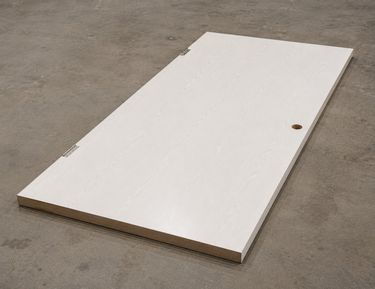
Why Fire and Smoke Doors Are Essential in Commercial Buildings
Many commercial projects fail inspection not because the fire doors were poorly manufactured — but because the wrong door type was specified.
A standard fire door is designed to resist flames and high temperatures. However, in many public facilities, smoke protection is equally critical.
Fire and smoke doors are tested not only for fire resistance, but also for smoke leakage under pressure conditions such as 25Pa. Using the wrong door assembly in smoke-control areas can lead to failed inspections, costly replacements, and project delays.
Understanding the difference between certified protective doors and fire + smoke doors is essential for architects, contractors, and project specifiers. In modern commercial construction, smoke-control performance is no longer considered an optional feature. In many cases, it is a mandatory requirement tied directly to life safety, building code compliance, and project approval.
As commercial buildings become larger and more complex, fire and smoke door systems are increasingly used to support compartmentation strategies, evacuation routes, and smoke management systems. Selecting the correct certified assembly early in the project can help reduce compliance risks while improving overall building safety performance.
What Are Fire and Smoke Doors?
Fire and smoke doors are specialized door assemblies designed to provide both fire resistance and smoke leakage control. Unlike standard fire doors that focus primarily on resisting flames and heat, these systems are also engineered to limit smoke movement between building compartments.
Smoke inhalation is one of the leading causes of injury and death during building fires. Because of this, modern building regulations often require smoke-control performance in addition to fire resistance. smoke-resistant doors help slow the spread of toxic smoke through corridors, stairwells, escape routes, and occupied spaces.
A complete fire and smoke door assembly typically includes:
- Fire-rated door leaf
- Smoke seals or intumescent seals
- Certified frame system
- Tested hardware components
- Self-closing mechanisms
These components are tested together as a complete assembly to verify both thermal resistance and air leakage performance under controlled laboratory conditions.
Standards such as UL 1784 and EN 1634-3 are commonly used to evaluate air leakage performance. Many commercial projects now require compliance with both fire-resistance and smoke-control testing standards before approval.
Fire Doors vs Fire and Smoke Doors: What’s the Difference?
Although the terms are sometimes used interchangeably, standard fire doors and fire + smoke doors are not the same product category. The difference lies mainly in smoke-control capability and testing requirements.
A standard fire door is designed to resist flames and maintain structural integrity for a specified period such as 30, 60, 90, or 120 minutes. However, some standard fire-rated assemblies may not provide sufficient air leakage performance control for protected escape routes or smoke-control zones.
Fire-rated smoke doors, by contrast, are tested for both fire endurance performance and air leakage performance. These systems use specialized perimeter seals and tighter assembly tolerances to reduce smoke movement under pressure conditions.
The table below highlights the main differences:
| Feature | Standard Fire Door | Fire and Smoke Door |
|---|---|---|
| Fire Resistance | Yes | Yes |
| Smoke Leakage Testing | Not always required | Required |
| Smoke Seals | Optional in some projects | Typically required |
| Pressure Leakage Testing | Limited | Yes |
| Common Use Areas | Basic fire compartments | Escape routes & smoke-control zones |
Why the Difference Matters
- A door can pass fire testing but still fail smoke-control inspection
- Smoke leakage requirements vary by building type and occupancy
- Incorrect specification may lead to project delays or replacement costs
- Smoke-control doors often require additional sealing systems and certified hardware
Because regulations differ across regions, project teams should always verify local code requirements before finalizing specifications.
Why Smoke Protection Matters as Much as Fire Resistance in Commercial Buildings
In many building fires, smoke spreads faster than visible flames. Toxic smoke can quickly reduce visibility, limit evacuation efficiency, and create dangerous breathing conditions long before structural failure occurs.
This is why smoke compartmentation has become a key part of modern passive fire protection strategies. Fire-rated smoke doors help isolate affected areas while protecting escape routes and adjacent occupied spaces.
Commercial buildings such as hotels, hospitals, offices, shopping centers, and schools often contain long corridors and interconnected spaces where smoke can travel rapidly if not properly controlled. In these environments, smoke infiltration protection can be just as important as fire endurance performance itself.
Several factors make smoke protection especially important:
- Smoke inhalation risks during evacuation
- Reduced visibility in escape routes
- Protection of stairwells and refuge areas
- Support for mechanical smoke-control systems
- Compliance with modern building regulations
In healthcare and hospitality projects, smoke management becomes even more critical because occupants may require additional evacuation time. Fire and smoke door systems help maintain safer evacuation conditions while emergency procedures are underway.
What Is Smoke Leakage Testing and 25Pa Requirements
Smoke leakage testing evaluates how much smoke-related air movement passes through a door assembly under controlled pressure conditions. One of the most commonly referenced pressure conditions in commercial building standards is 25Pa.
The 25Pa requirement simulates pressure differences that may occur during smoke-control operations or real fire conditions. During testing, air leakage rates are measured to determine whether the assembly meets allowable limits.
A door assembly that performs well in fire testing alone may still fail smoke infiltration testing if gaps around the perimeter or hardware areas allow excessive air movement. This is why smoke seals, frame alignment, and installation quality are critical.
Several factors influence smoke infiltration performance:
- Door edge sealing quality
- Frame alignment accuracy
- Hardware compatibility
- Threshold design
- Installation precision
Testing standards such as UL 1784 and EN 1634-3 are commonly referenced for smoke-control evaluations. Commercial projects often require documentation confirming that the complete assembly has passed both fire-resistance and smoke infiltration testing requirements.
Common Specification Mistakes That Cause Inspection Failure
Many inspection failures occur because project teams misunderstand the difference between standard fire-rated doors and smoke-control assemblies. Incorrect specification decisions can create major compliance problems during final inspection stages.
One common mistake is specifying a standard fire door in areas where smoke-control performance is required by code. While the door may meet fire-resistance requirements, it may lack the tested smoke seals or leakage certification needed for approval.
Another issue involves mixing uncertified components. Even if individual parts are fire-rated, combining non-tested frames, hardware, or seals can invalidate the assembly certification.
Frequent Specification Problems
- Using non-tested hardware combinations
- Omitting smoke seals in required areas
- Incorrect pressure leakage ratings
- Poor installation alignment
- Substituting uncertified components during procurement
Project teams should also pay close attention to local regulations, as smoke-control requirements may differ between regions and occupancy types. Early coordination between architects, contractors, suppliers, and inspectors can significantly reduce compliance risks.
Where Fire and Smoke Doors Are Required in Commercial Buildings
Fire and smoke doors are commonly required in areas where both fire compartmentation and smoke-control performance are necessary for occupant safety.
Typical applications include stairwells, escape corridors, hotel guestroom entrances, healthcare facilities, underground parking connections, mechanical rooms, and smoke-control zones. In many commercial projects, these assemblies are also required around elevator lobbies and protected refuge areas.
Healthcare buildings often have stricter smoke-control requirements because patients may not be able to evacuate quickly without assistance. Hotels and residential towers also rely heavily on smoke compartmentation to protect sleeping occupants during emergency situations.
Modern commercial developments increasingly integrate smoke-control strategies into the overall building design process. As a result, smoke-resistant doors are becoming standard components in high-occupancy and high-rise projects worldwide.
Conclusion
Fire and smoke doors play a critical role in modern commercial building safety by combining certified fire resistance with smoke leakage control. While standard fire doors help resist heat and flames, smoke-control assemblies provide additional protection that supports safer evacuation and regulatory compliance.
Understanding the difference between these systems can help architects, contractors, and developers avoid costly specification mistakes, failed inspections, and project delays. Selecting the correct tested assembly is essential for maintaining both life safety and long-term operational reliability.
Old To New provides certified fire and smoke door solutions for commercial projects, helping clients achieve reliable smoke-control performance, code compliance, and flexible architectural integration for modern buildings.

Contact
Beyond Protection, There's Peace of Mind.
© 2024 oldtonew Powered by ShopAstro