


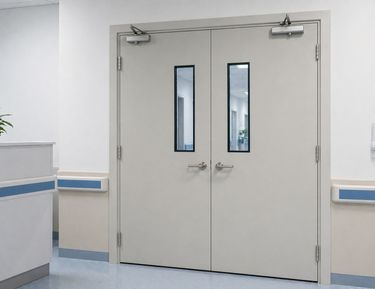
Steel vs Wooden Fire Doors: Which One Is Right for Your Project?
Steel vs wooden fire doors is a common consideration in commercial building projects, especially when balancing fire safety, cost, and design requirements.
For most commercial interior projects such as hotels, offices, and apartments, wooden fire doors are often the preferred choice due to their design flexibility, cost efficiency, and ease of installation.
Steel fire doors, on the other hand, are more suitable for industrial environments or high-impact areas where durability and security are the top priorities.
Understanding the differences between these two types of fire doors is essential for making the right decision based on your project’s specific requirements.
What Are Steel and Wooden Fire Doors?
Steel fire doors are constructed with steel sheets and insulated cores, designed for strength, impact resistance, and stability under demanding conditions. They are commonly used in industrial buildings, warehouses, and service areas where durability is critical and exposure to harsh environments is expected.
Wooden fire doors, by contrast, use engineered cores such as mineral or composite structures combined with timber or veneer finishes. They are widely applied in offices, hotels, and commercial interiors where both safety and visual integration are important. Understanding these structural and functional differences is the first step in evaluating the most suitable fire door solution for your project.
Key Differences Between Steel and Wooden Fire Doors
When comparing different fire door materials, several factors influence the decision, including performance, design, and cost.
- Durability: Steel doors resist impact and harsh environments better
- Aesthetics: Wooden doors offer more design flexibility and finishes
- Weight: Steel doors are generally heavier, affecting installation
- Maintenance: Wooden doors may require more care in certain environments
These factors help contractors quickly understand the practical differences between these options and make informed decisions based on project needs.
Another important distinction lies in weight and handling. Steel doors are typically heavier, which may require reinforced hardware and more complex installation processes, while wooden doors are easier to adjust on-site, improving installation efficiency.
To better illustrate the differences, the following table summarizes the key comparison:
| Factor | Steel Fire Doors | Wooden Fire Doors |
|---|---|---|
| Durability | High, suitable for heavy-duty use | Moderate to high, depends on core |
| Aesthetics | Limited design options | Highly customizable finishes |
| Weight | Heavier, requires stronger hardware | Lighter, easier installation |
| Maintenance | Lower in harsh environments | Moderate, depends on usage |
| Application | Industrial, service areas | Commercial, interiors |
In addition, testing standards show that both steel and wooden fire doors can meet the same fire rating levels when certified as complete systems. For example, both can achieve 60, 90, or 120-minute ratings depending on core composition and assembly design.
This highlights an important point: fire resistance is determined by the complete door system, not just the surface material.
When Wooden Fire Doors Are the Better Choice
Wooden fire doors are often preferred in commercial environments where both safety and design consistency are required. They provide a natural and customizable appearance that integrates well with modern interior architecture, making them suitable for offices, hotels, and public-facing spaces.
In recent years, advancements in core materials have enabled wooden fire doors to achieve fire ratings of 60, 90, or even 120 minutes, allowing them to meet strict commercial requirements while maintaining aesthetic value.
Design Flexibility and Interior Integration
Wooden fire doors can be finished with veneers, laminates, or painted surfaces to match specific design themes. This flexibility allows architects to maintain visual consistency across different areas of a building without compromising fire safety.
Additionally, wooden doors are easier to customize in terms of size, edge detailing, and surface treatment, which is often a decisive factor in material selection for commercial projects.
When Steel Fire Doors Make Sense
Steel fire doors are better suited for environments where durability, security, and resistance to external conditions are top priorities. They are commonly used in industrial facilities, storage areas, and service corridors where exposure to impact, moisture, or heavy usage is expected.
Their structural strength and resistance to deformation make them a reliable choice in demanding conditions. In high-risk zones, steel doors also provide additional security benefits due to their resistance to forced entry.
High-Strength and Low Maintenance Environments
Steel doors perform particularly well in areas with frequent operation or mechanical stress. They require less maintenance in harsh environments and maintain structural integrity over time.
In high-demand environments, steel is often selected when performance stability and durability outweigh design considerations.
How to Choose the Right Fire Door Based on Your Project Type
Selecting between steel and wooden fire doors should be based on how the door will be used within your project, rather than material preference alone. Factors such as building function, fire risk level, and user experience all play a critical role.
For most commercial interior environments—including offices, hotels, and residential buildings—wooden fire doors are typically the preferred option due to their balance of fire performance, design flexibility, and installation efficiency. In contrast, steel fire doors are more suitable for industrial areas or high-impact zones where durability and resistance to harsh conditions are essential.
To simplify the decision-making process, you can evaluate your project based on the following criteria:
Project Type
- Commercial interiors → Wooden fire doors
- Industrial or service areas → Steel fire doors
Fire Rating Requirement
- Standard fire-rated partitions (30–90 mins) → Both options viable
- High-risk or heavy-duty zones → Steel often preferred
Usage Frequency
- Moderate to high traffic (offices, hotels) → Wooden doors offer better usability
- Extreme usage or mechanical stress → Steel doors provide higher durability
Design Requirements
- Aesthetic integration and customization → Wooden fire doors
- Functional priority with minimal design concern → Steel fire doors
Compliance and Approval
Local building codes, certification standards (such as UL, BS, or EN), and inspection requirements should always be considered early in the selection process. Choosing a compliant fire door system from the beginning can significantly reduce approval risks and project delays.
By applying this structured approach, project stakeholders can make faster, more accurate decisions while ensuring both compliance and long-term performance.
Why More Commercial Projects Are Choosing Wooden Fire Doors
In recent years, more commercial projects have shifted toward wooden fire doors due to their balance between performance and design flexibility. Increasing demand for high-quality interior environments has driven the adoption of fire-rated doors that can blend seamlessly with architectural aesthetics.
Modern wooden fire doors incorporate advanced core technologies that deliver strong fire resistance while maintaining a refined appearance. Additionally, sustainability considerations have influenced material choices, with many projects favoring renewable or certified materials.
From a practical perspective, wooden doors also offer advantages in customization and adaptability, making them suitable for projects with complex design requirements. As a result, in many steel vs wooden fire doors comparisons, wooden doors are becoming the preferred solution for commercial interiors.
Performance Considerations Beyond Material
When evaluating fire door performance, it is essential to consider the entire fire door system rather than focusing solely on surface materials. Fire performance depends on core structure, sealing systems, hardware compatibility, and installation accuracy.
For example, mineral core wooden doors can achieve fire resistance comparable to steel doors when properly engineered and certified, while poor installation can compromise any system regardless of material.
Contractors should also assess additional performance factors such as acoustic insulation, thermal resistance, and user experience, as these influence both safety and building comfort.
It is also worth noting that usability plays a role in long-term performance. Heavier steel doors may require stronger hardware and more maintenance in high-frequency usage areas, while wooden fire doors often provide smoother operation in commercial interiors.
Long-Term Value and Project Efficiency
When evaluating fire door solutions, long-term value should be considered alongside initial cost. While steel doors may offer durability advantages in harsh environments, wooden fire doors often provide better flexibility in design-driven commercial projects.
Lifecycle cost is a critical factor for contractors and developers. This includes not only the purchase price, but also installation efficiency, maintenance frequency, and potential replacement costs over time. In many commercial settings, wooden doors can reduce modification and retrofit costs due to easier customization.
Lead time and supply chain stability also impact project timelines. Steel doors may have longer production cycles in some regions, while wooden fire doors can often be manufactured with greater flexibility, especially for customized designs.
From a project management perspective, choosing the right door type can reduce delays, simplify installation, and improve coordination between trades. These factors directly influence overall project efficiency. Ultimately, the decision should balance upfront cost with long-term performance, ensuring both compliance and operational efficiency.
Conclusion
While there is no one-size-fits-all solution when comparing steel and wooden fire doors, the right choice should always be based on your project’s specific requirements.
For most commercial interior applications, wooden fire doors provide a well-balanced solution—offering certified fire performance, design flexibility, easier installation, and cost efficiency. Steel fire doors remain more suitable for industrial or high-impact environments where durability is the primary concern.
Ultimately, selecting the right fire door is not just about material, but about choosing a system that aligns with your building function, compliance requirements, and long-term performance expectations.
If your project involves commercial interiors such as offices, hotels, or residential buildings, reviewing real-world applications can help you better understand how different solutions perform in practice.
See How Wooden Fire Doors Perform in Real Projects
For contractors and developers, real project cases provide valuable insight into how fire-rated doors meet compliance requirements while supporting design integration and construction efficiency across different building types.
→ View Old to New's Fire Door Project Cases
Need Help Choosing the Right Fire Door for Your Project?
If you are currently planning or specifying a project, engaging with a manufacturer early can help avoid specification errors, reduce approval risks, and improve overall project efficiency.
Our team can support you in evaluating fire rating requirements, door configurations, and project-specific conditions to ensure the most suitable wooden fire door solution.

Contact
Beyond Protection, There's Peace of Mind.
© 2024 oldtonew Powered by ShopAstro