


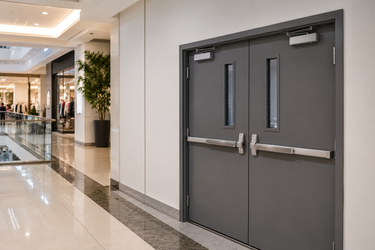
Fire Door Requirements by Building Area: Where Different Fire Ratings Are Needed
Fire door requirements are not the same across every part of a building. Different spaces present different fire risks, evacuation conditions, and smoke-control challenges. A stairwell, electrical room, hotel corridor, and hospital ward may all require different fire door specifications even within the same project.
Understanding fire door requirements by building area is essential for architects, contractors, developers, and procurement teams. Incorrect specifications can lead to failed inspections, delayed approvals, higher replacement costs, and increased life-safety risks. In many commercial projects, doors fail compliance not because the products are defective, but because the wrong fire rating or smoke-protection level was selected for the location.
Modern commercial fire door requirements are based on compartmentation strategies, occupancy type, evacuation time, and local code compliance. Depending on the building area, projects may require standard fire-rated doors, smoke-control assemblies, or combined fire and smoke doors. Choosing the correct system helps support passive fire protection, safer evacuation routes, and long-term building compliance.
Industry standards such as UL 10C, NFPA 80, and EN 1634-1 increasingly emphasize complete tested assemblies rather than individual door components alone. According to NFPA guidance, improperly specified or non-compliant fire doors remain one of the most common issues identified during commercial building inspections. This highlights why location-specific door selection is critical in modern construction projects.
Common Building Areas and Typical Fire Door Requirements
Different building zones require different fire-resistance durations and smoke-control capabilities. The fire door requirements by building area are generally determined by how quickly occupants can evacuate, how likely smoke migration is, and how important compartmentation is for controlling fire spread.
The table below summarizes common commercial applications and typical door requirements:
| Building Area | Typical Fire Rating | Smoke Protection Needed | Common Door Type |
|---|---|---|---|
| Stairwells | 90–120 mins | Yes | Fire & smoke door |
| Corridors | 60–90 mins | Often required | Smoke-rated fire door |
| Electrical Rooms | 90–120 mins | Sometimes | Heavy-duty fire-rated door |
| Hotel Guest Floors | 60 mins | Yes | Fire and smoke assembly |
| Hospitals | 60–120 mins | Yes | Smoke-control fire door |
| Mechanical Rooms | 90 mins | Limited | Fire-rated steel/wood door |
| Retail Back-of-House Areas | 60 mins | Depending on code | Rated commercial door |
These examples are general industry practices and may vary depending on local regulations and project-specific design strategies. Contractors should always confirm final specifications with the applicable authority having jurisdiction (AHJ).
Commercial fire door requirements often become more demanding in high-occupancy environments where smoke migration can significantly affect evacuation safety. This is why fire doors for stairwells, healthcare facilities, and hotel corridors usually require both fire resistance and smoke-control performance.
Areas Most Commonly Requiring Fire Doors
Some building areas consistently require fire-rated door assemblies because they are critical to compartmentation and evacuation planning. Understanding where are fire doors required helps reduce specification mistakes early in project development.
Stairwells are among the most important protected areas in commercial buildings. Fire doors for stairwells help prevent smoke and flames from entering escape routes, allowing occupants more time to evacuate safely. Many codes require higher-rated assemblies in these locations due to their life-safety importance.
Service rooms such as electrical rooms, generator rooms, and mechanical equipment areas also commonly require higher fire ratings because they contain ignition sources or high-risk equipment. Fire separation in these spaces helps limit fire spread into occupied zones.
Corridors and hallway separation doors are another major category. In hotels, hospitals, schools, and office buildings, these locations often require smoke-control capability in addition to fire endurance. Smoke typically spreads faster than flames during early fire stages, making corridor protection especially important.
High-Risk Areas That Often Require Smoke Protection
Some spaces may require both fire and smoke doors rather than standard fire-rated assemblies alone. These typically include:
- Escape routes and exit enclosures
- Healthcare evacuation corridors
- High-rise residential towers
- Underground parking access areas
- Mixed-use commercial developments
In these environments, smoke leakage performance can be just as important as fire endurance duration.
When Are Fire & Smoke Doors Needed Instead?
Standard fire-rated doors primarily focus on resisting flame penetration and maintaining structural integrity during fire exposure. However, some commercial spaces also require protection against smoke migration. This is where combined fire and smoke doors become necessary.
Smoke inhalation is considered one of the leading causes of fire-related fatalities in commercial buildings. Because of this, many modern building codes require smoke-control performance in addition to fire resistance for specific fire door locations.
Smoke-control door systems are commonly tested under pressure conditions such as 25Pa to evaluate leakage rates and perimeter sealing performance. Proper smoke seals, frame integration, and hardware compatibility are essential for maintaining certified assembly performance.
Several factors commonly trigger the need for fire and smoke doors:
- Long evacuation paths
- High occupant density
- Limited ventilation areas
- Sleeping accommodations
- Underground or enclosed environments
- High-rise structures
For example, hospitals often require smoke-rated assemblies because occupants may not be able to evacuate quickly. Hotels also frequently require smoke-control doors in corridors and stairwells to help contain smoke during emergency conditions.
Modern commercial buildings increasingly prioritize integrated life-safety systems. As a result, fire and smoke assemblies are becoming more common across public infrastructure, hospitality, transportation, and healthcare projects.
Common Specification Mistakes by Location
Many fire door inspection failures occur because the selected door system does not match the actual building area requirements. Understanding common mistakes can help contractors avoid costly corrections later in the project lifecycle.
One common issue is assuming the same fire rating can be used throughout an entire building. In reality, different zones may require different performance levels based on occupancy risk and evacuation strategy. Using a lower-rated assembly in a stairwell or service room can create compliance problems.
Another frequent mistake is overlooking smoke-control requirements. Some contractors specify standard fire-rated doors in areas that actually require smoke leakage testing and certified smoke seals. This often becomes a major issue during final inspections.
Procurement Errors That Affect Compliance
Specification and procurement teams should avoid several common errors:
- Mixing non-tested hardware with certified assemblies
- Replacing approved seals with lower-cost alternatives
- Ignoring frame compatibility requirements
- Using residential products in commercial environments
- Selecting doors based only on upfront cost
In many cases, changing one component can invalidate the performance certification of the entire assembly. This is why many standards now emphasize tested systems rather than isolated products.
Another overlooked issue is long-term maintenance planning. Heavy-use areas such as hospitals, schools, and office towers may require more durable materials and hardware systems to maintain compliance over time.
Checklist Before Selecting Fire Doors for Different Areas
Selecting the correct fire door system requires more than choosing a fire rating. Contractors and specifiers should evaluate how the door interacts with the building’s overall life-safety strategy, operational demands, and maintenance conditions.
Before final approval, project teams should confirm the following:
| Evaluation Factor | Why It Matters |
|---|---|
| Required fire rating | Determines code compliance |
| Smoke-control performance | Supports safer evacuation |
| Occupancy type | Affects risk level |
| Door frequency of use | Influences durability requirements |
| Hardware compatibility | Ensures certified assembly performance |
| Frame integration | Maintains structural stability |
| Applicable standards | Prevents inspection issues |
Proper planning early in the design stage can significantly reduce procurement conflicts and rework costs later. Many specification problems happen because contractors evaluate doors too late in the construction process.
Why Complete Assemblies Matter
Modern commercial fire door requirements increasingly focus on complete system certification. This means the door leaf, frame, seals, hinges, glazing, and hardware should all be tested together as a unified assembly.
Even high-quality products may fail compliance if mixed with incompatible components. Coordinating with experienced manufacturers during specification development can help reduce these risks and improve project efficiency.
For large commercial projects, balancing fire resistance, smoke control, durability, thermal performance, and long-term maintenance is essential for achieving reliable building protection.
Conclusion
Understanding fire door requirements by building area is critical for selecting the correct protection strategy in modern commercial construction. Different fire door locations present different risks, evacuation conditions, and compliance requirements, making location-specific specifications essential.
From stairwells and corridors to electrical rooms and healthcare facilities, choosing the correct assembly helps improve compartmentation, smoke containment, and occupant safety. As commercial fire door requirements continue evolving, tested systems and properly matched specifications are becoming increasingly important for successful project delivery.
Old To New provides certified fire-rated door systems designed for commercial applications requiring reliable fire protection, smoke-control performance, and long-term compliance support across different building environments.

Contact
Beyond Protection, There's Peace of Mind.
© 2024 oldtonew Powered by ShopAstro