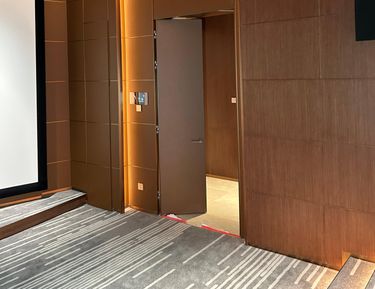
Commercial buildings face far more stringent fire-safety expectations than residential spaces. Offices, hotels, hospitals, schools, and retail environments all depend on carefully specified fire-protection systems to safeguard occupants and property. Among these systems, the fire-rated wood door plays a crucial role. It must not only slow the spread of fire and smoke but also integrate seamlessly into architectural design, acoustic control, durability requirements, and daily operational demands.
Understanding the requirements and design considerations for a fire-rated wood door helps architects, contractors, and building owners make informed decisions that balance compliance, safety, and aesthetics. From regulatory standards to material selection and long-term performance, every detail matters—especially in high-traffic commercial settings.
Understanding Fire-Rated Wooden Doors in Commercial Buildings
A fire-rated wood door is engineered to resist fire for a specified period, typically 20, 30, 60, or 90 minutes, depending on the application. Unlike standard interior doors, a fire-rated wood door must perform as part of a tested assembly that includes the door leaf, frame, hardware, and seals. In commercial environments, the door is expected to maintain structural integrity, limit heat transfer, and prevent smoke leakage during a fire event.
While steel fire doors are common in industrial facilities, many designers prefer a fire-rated wood door in commercial interiors due to its warmer appearance and greater flexibility in finishes. Wood doors allow designers to achieve brand consistency, luxury aesthetics, or natural materials while still meeting life-safety codes.
Key Regulatory Requirements for Commercial Fire-Rated Wooden Doors
The primary requirement for any fire-rated wood door is compliance with fire-testing standards. Depending on the region, these may include UL, NFPA, EN, or BS standards. These regulations define how long a fire-rated wood door must withstand fire exposure, pressure, and temperature rise without failure.
Commercial fire codes also specify where a fire-rated wood door must be installed. Common locations include stairwells, corridors, fire compartments, and exits. Each application may require a different fire rating, and the fire-rated wood door must be clearly labeled and traceable to certified test reports.
Beyond fire resistance, commercial regulations often address smoke control. A fire-rated wood door may need to meet additional requirements for smoke leakage, particularly in healthcare or hospitality buildings. This directly influences door construction, perimeter gaps, and the use of intumescent or smoke seals.
Structural Integrity and the Role of the Solid Door Core
One of the most critical design considerations for a fire-rated wood door is its internal construction. The solid door core is central to fire performance, acoustic control, and durability. In commercial applications, a solid door coreprovides the mass and density needed to resist fire penetration and maintain door stability under extreme heat.
A high-quality solid door core minimizes warping, cracking, and delamination—issues that can compromise fire resistance over time. Compared to hollow-core alternatives, a solid door core significantly enhances impact resistance, making it suitable for high-traffic areas such as corridors, meeting rooms, and public entrances.
From a compliance standpoint, the solid door core must be part of a tested door assembly. Substituting materials or altering the solid door core can invalidate fire ratings. Therefore, specifying a certified solid door core is not just a performance choice but a regulatory necessity.
Material Selection and Fire Performance
The performance of a fire-rated wood door depends heavily on material selection. Wood species, core composition, adhesives, and surface finishes all influence fire behavior. In many commercial designs, engineered wood combined with fire-resistant additives is used to optimize consistency and performance.
The solid door core often incorporates mineral fillers, fire-retardant treatments, or composite layers designed to slow combustion. When exposed to heat, these materials can char predictably, forming an insulating barrier that protects the door’s integrity. A properly engineered solid door core ensures that the fire-rated wood door meets both fire and structural requirements.
Equally important are surface finishes. Veneers, laminates, or paints applied to a fire-rated wood door must be compatible with fire testing results. Excessively thick or non-approved finishes can negatively affect fire performance, even if the solid door core itself meets standards.
Design Flexibility and Aesthetic Considerations
One advantage of a fire-rated wood door is its adaptability to diverse architectural styles. Unlike steel doors, a fire-rated wood door can be customized with natural veneers, stains, or contemporary finishes while retaining its certified performance.
The solid door core allows for precise machining, enabling designers to incorporate vision panels, decorative grooves, or custom profiles—provided these modifications are within approved testing limits. In commercial interiors where branding and visual continuity are essential, a fire-rated wood door offers a balance between safety and design freedom.
Designers should also consider door thickness, edge detailing, and frame compatibility. A solid door core typically requires robust frames that can support the door’s weight while maintaining required clearances for fire and smoke control.
Hardware, Seals, and Assembly Integrity
A fire-rated wood door is only as effective as its weakest component. Hardware selection—hinges, locks, closers, and panic devices—must be fire-rated and compatible with the door assembly. The solid door core must be reinforced internally to support hardware installation without compromising fire performance.
Intumescent seals are another critical element. These seals expand under heat, closing gaps between the fire-rated wood door and the frame to block flames and smoke. The interaction between seals and the solid door core must be carefully engineered to ensure reliable activation during a fire.
In commercial settings, frequent use can lead to wear and misalignment. Regular inspection and maintenance are essential to preserve the performance of a fire-rated wood door and its solid door core, ensuring ongoing compliance throughout the building’s lifecycle.
Acoustic, Thermal, and Durability Considerations
Beyond fire resistance, a fire-rated wood door often serves additional performance roles. In offices and hotels, acoustic insulation is a major concern. The density of a solid door core significantly improves sound attenuation, contributing to occupant comfort.
Thermal performance is another factor. A well-designed solid door core can reduce heat transfer, supporting energy efficiency and indoor climate control. This is especially relevant in commercial buildings with strict sustainability targets.
Durability is equally important. The solid door core enhances resistance to dents, impacts, and daily wear, reducing long-term maintenance costs. For building owners, investing in a high-quality fire-rated wood door with a robust solid door core translates into lower replacement frequency and better lifecycle value.
Commercial Fire-Rated Wooden Door Solutions
For projects seeking reliable performance and refined aesthetics, Old To New offers commercial fire-rated wood door solutions engineered around a high-performance solid door core. These doors are designed to meet international fire standards while supporting architectural flexibility, making them suitable for offices, hotels, and public buildings. By combining certified fire resistance with carefully selected materials and precision manufacturing, Old To New ensures each fire-rated wood door delivers consistent safety, durability, and visual appeal.
Installation, Compliance, and Long-Term Performance
Even the best-designed fire-rated wood door can fail if improperly installed. Commercial installations must follow manufacturer guidelines precisely, particularly regarding frame anchoring, gap tolerances, and seal placement. The solid door core must remain intact and undamaged throughout installation to preserve its fire rating.
Post-installation inspections and routine maintenance are equally critical. Building operators should regularly check that the fire-rated wood door closes properly, seals are intact, and hardware functions as intended. Over time, alterations to the solid door core, such as unauthorized drilling or cutting, can compromise fire performance and void certifications.
Conclusion
Selecting the right fire-rated wood door for a commercial building involves far more than choosing a fire rating. Regulatory compliance, material engineering, design flexibility, and long-term durability all play vital roles. At the heart of these considerations lies the solid door core, which underpins fire resistance, structural stability, acoustics, and everyday performance.
By understanding how a fire-rated wood door functions as part of a complete fire-protection system, project stakeholders can make informed decisions that enhance safety without sacrificing design intent. With the right specifications, proper installation, and ongoing maintenance, a well-engineered fire-rated wood door delivers lasting value—protecting lives, property, and architectural integrity for years to come.